

Why coconut, not olive.
On the chemistry that wins over the geography.
The Mediterranean has olive oil, argan, fig leaf. Gorgeous things. Ancient things. None of them belong in your self-tan.

Olive sits on top. Coconut binds.
Olive oil sits on top of skin. Coconut water binds to it. Different molecule, different result. The Mediterranean knew olive. Polynesia knew better.
Two thousand years of proof
Monoi de Tahiti - coconut oil steeped with tiare flowers - has been the gold standard for sun and skin for two thousand years. Wedding gift, ritual oil, beauty cabinet. Same bottle.
The Mediterranean knew olive. Polynesia knew better.
Where commercial self-tan went wrong
When self-tan went commercial, the formulas drifted to mineral oils and synthetics. They worked. They also clogged pores. The chemistry was a step backward.

Why coconut water, not coconut oil
Coconut water isn't oil. It's 95% water and 5% electrolytes - potassium, magnesium, sodium, calcium, phosphorus. It hydrates without coating. Skin lands plush instead of slick.
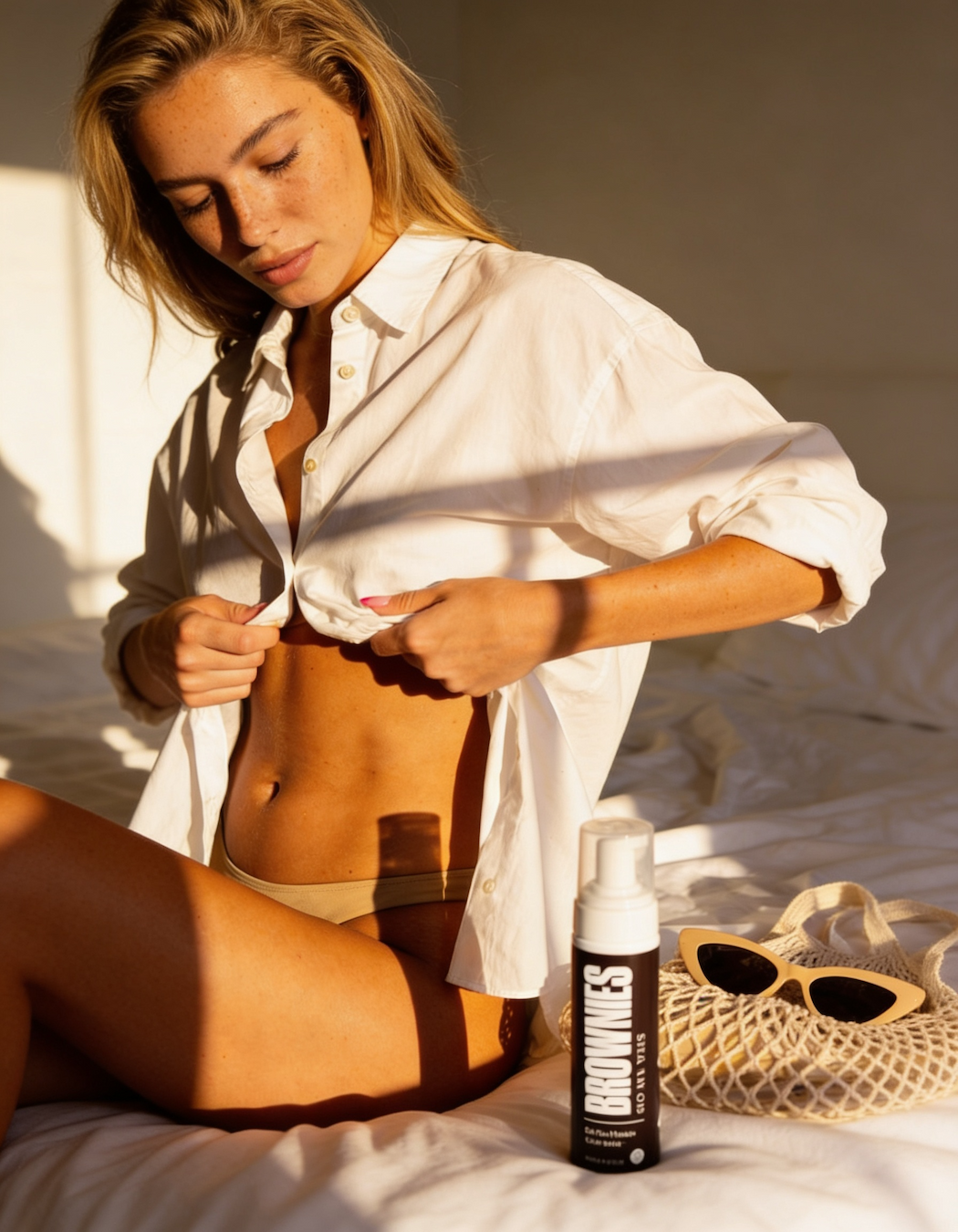
So we whip real coconut water into our Coconut Fudge mousse. Not oil. Not extract. Same idea the Tahitians had, with better chemistry.
Two thousand years of beauty wisdom condensed into a 200ml jar. Apply before bed. Wake up bronzed.
Quick questions, honest answers
Is coconut oil good for self-tan?
Coconut oil and coconut water aren't the same thing. Oil sits on the surface and can block pores; coconut water is mostly water and electrolytes, so it hydrates without coating. Our mousse uses the water, not the oil.
Does coconut self-tan hydrate dry skin?
Yes. Coconut water is roughly 95% water and 5% skin-loving minerals, so the formula moisturises while it develops - skin lands plush rather than tight or flaky.
Will it turn me orange?
No. Beyond the coconut base, every Brownies shade is built with green and violet undertones that neutralise yellow before it surfaces, so the bronze reads natural, not brassy.
Find your depth across the full shade range.

 Pay $0 today
 Try it on
 Keep the glow
